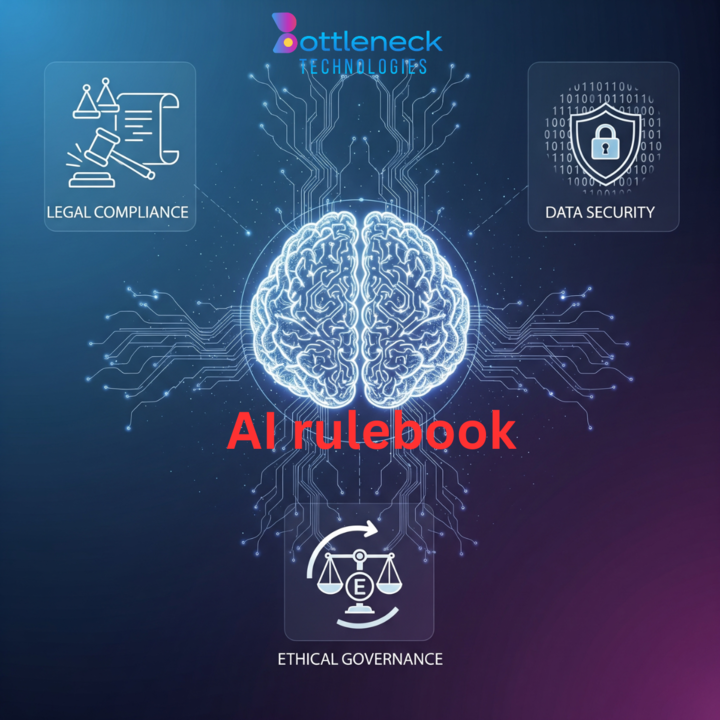
In today’s business landscape, Artificial Intelligence is becoming an integral part of daily operations. From powering customer support to accelerating decision-making, AI is fundamentally reshaping how teams work. But this immense power comes with an equally immense risk. Without a clear set of rules, or a “rulebook,” for its use, AI can expose an organization to significant vulnerabilities.
This is why a company-wide AI policy is no longer a luxury but a necessity. A good policy sets clear expectations, builds customer trust, ensures compliance with emerging regulations, and aligns AI’s powerful capabilities with strategic business goals. It serves as a practical framework for guiding decisions and minimizing risks as AI continues to evolve. The absence of such a framework leaves an organization vulnerable to a range of risks, including data privacy violations, ethical missteps, and reputational damage. A well-crafted policy is not a static document; it is a “living document” that evolves as the legal and technological landscape changes.
The Four Pillars of Your AI Policy
An effective AI policy is a strategic framework that provides a blueprint for responsible and ethical innovation. It is built upon four foundational pillars that address the core challenges of integrating AI into the modern enterprise.
Pillar 1: The Cornerstone of Compliance & Governance
In the complex web of modern business, legal compliance is a cornerstone of sustainable and ethical operations. An AI policy is a crucial tool for navigating this new regulatory landscape. It is not merely about avoiding penalties, but about fostering a culture of compliance with sensitive and confidential information.
Evolving Legal Landscape: As countries and regions implement their own AI regulations, an AI policy helps businesses stay compliant with a new set of legal considerations related to data privacy, intellectual property, and consumer rights. This includes navigating frameworks like the EU AI Act, which classifies AI systems by risk level , and various U.S. state regulations.
Intellectual Property (IP): The policy must address the complex legal challenges surrounding IP. This includes defining ownership of AI-generated content and mitigating the risk of copyright infringement when using copyrighted data to train AI models.
Data Protection: AI’s reliance on vast datasets raises significant data privacy issues. An AI policy must outline how data is collected, stored, and used to comply with regulations like GDPR and CCPA.
Pillar 2: The Blueprint for Strategic Alignment & Growth
An AI policy is a hallmark of astute business practice, serving as a “GPS for your business’s AI initiatives”. It ensures that AI technologies are implemented with a purpose and are aligned with long-term goals, providing a clear roadmap for success and a competitive advantage.
Risk Management: Policies help to identify and mitigate potential risks such as algorithmic bias, data misuse, and the proliferation of unapproved “shadow AI” tools.
Transparency and Accountability: By setting clear guidelines, a policy promotes transparency and accountability, bolstering public and consumer trust. It also serves as a “launchpad for exploring cutting-edge AI technologies in a controlled and secure manner”.
Innovation with Guardrails: Rather than stifling innovation, a policy provides the necessary guardrails to allow for a secure and controlled environment for experimentation, which is essential for businesses seeking to maintain a competitive edge.
Pillar 3: The Human-Machine Alliance: Empowering Your Workforce
AI is reshaping job roles and workplace dynamics, a well-thought-out AI policy is instrumental in guiding the workforce and fostering a positive, evolving workplace.
Employee Guidance: A clear policy provides essential guidance for employees on proper AI usage, including which tools are approved, how to handle sensitive information, and the importance of human oversight.
Training and Development: The policy underpins training initiatives, equipping staff with the skills needed to collaborate with AI tools. This prepares the workforce for augmented roles and enhances both personal and organizational growth.
Ethical Workplace: A policy fosters an ethical and inclusive workplace by setting standards for AI use in sensitive areas such as recruitment and performance, safeguarding against biases and promoting equality. It also ensures that a human always has the final say in important business or employment decisions.
Pillar 4: The Pact with Your Customers: Building Trust in a Connected World
A strong AI policy is a game-changer for building and maintaining customer trust. Customers expect swift, personalized service, a well-crafted policy is your promise to handle customer data with care and attention.
Consistency and Transparency: A policy ensures that every AI interaction, from a chatbot to a recommendation system, aligns with your brand’s voice and values, acting as a consistent digital ambassador. By providing clear explanations for AI-driven decisions, an organization can build trust and demonstrate its commitment to fairness and ethical practices.
Data Privacy: A policy serves as a public declaration that a company is committed to securing customer data, outlining how it will protect privacy in its AI practices and comply with regulations. This commitment builds confidence and solidifies brand loyalty.
Explainable AI: By prioritizing explainability, a policy ensures that decisions made by AI systems are understandable and justifiable. This builds trust and ensures that customers and employees feel in control of their interactions with AI.
Crafting Your Policy: A Collaborative Road Map
Developing an effective AI policy requires a collaborative effort that is an essential and strategic move for unlocking the advantages of AI while minimizing its potential risks. A successful policy must involve input from a diverse range of stakeholders, including executive leadership, legal teams, HR, technology teams, and business unit leaders.